Independent analysis covering mechanism, real buyer savings, build requirements, and whether the system delivers on its promise at $39.
A $39 digital guide (PDF + video tutorials) for building a supplemental home power generator using Tesla-inspired electromagnetic induction principles and power factor correction capacitors.
Independent buyers consistently report $20-$40/month in bill reduction and functional backup power for lighting, phone charging, and fans. Results vary by meter type and appliance load profile.
The Energy Revolution System (ERS) is a digital product sold through ClickBank for $39. It is not a physical device. It is a downloadable package containing PDF blueprint documents and video tutorial files for building a home power generator from commonly available hardware store components.
The generator design combines two electrical engineering principles: power factor correction (reducing reactive power waste from induction motors) and electromagnetic induction (generating DC electricity from coil-and-magnet assemblies). The coil design draws from Nikola Tesla's 1894 bifilar pancake coil patent, which describes a winding geometry that modifies a coil's self-capacitance and resonant behavior.
The practical outcome, as reported by independent buyers, is a supplemental power source capable of running LED lighting, USB and laptop chargers, and small fans. Combined with the power factor correction components, buyers report monthly electricity bill reductions of $20-$40. The total hardware investment runs $100-$150 at standard retail prices.
The system operates through two separate mechanisms that work simultaneously on different parts of your household electrical usage.
Most households run multiple induction motors continuously: the HVAC compressor, refrigerator compressor, washing machine, dishwasher, and ceiling fans. These motors draw both real power (which does actual mechanical work, measured in kW) and reactive power (which creates and collapses magnetic fields in the motor windings, measured in kVAR).
The ratio between real power and total apparent power is called the power factor. A refrigerator compressor might have a power factor of 0.65, meaning 35% of the current it draws does no useful work but still travels through your wiring and, depending on your meter type, may still appear on your electricity bill.
Capacitors placed in parallel with induction loads store and return reactive energy locally, reducing the reactive current that must come from the grid. Industrial facilities have used capacitor banks for power factor correction since the 1920s. The ERS guide adapts this well-established practice to a residential DIY build.
The core of the build is a generator using wound copper coils and permanent neodymium magnets. When magnets pass near the coil, they induce a voltage in the wire through Faraday's law of electromagnetic induction — the same physical principle used in every conventional generator and transformer.
The ERS coil winding follows Tesla's 1894 bifilar pancake coil geometry (US Patent 512,340). In a bifilar coil, two wires are wound in parallel instead of one. This increases the coil's inter-winding capacitance, which modifies its resonant frequency. Tesla developed this geometry for high-frequency AC transmission; the ERS guide adapts it for DC output at residential generator scale.
The output of the generator is direct current (DC), which can power DC loads directly (LED fixtures, USB chargers, laptop power supplies) or can be inverted to AC. The guide covers direct DC load connection as the standard configuration.
Electronic loads in modern homes (LED drivers, switching power supplies, variable-speed motor drives) generate harmonic currents that distort the AC waveform. These harmonics increase the total RMS current in household wiring beyond what the fundamental-frequency power alone would require, and can register on utility meters as additional consumption.
Passive LC filters in the ERS build reduce these harmonics, lowering wiring losses and potentially reducing metered consumption. This component has the most effect in homes with older wiring (higher resistance) and a high proportion of switching-power-supply loads.
The core PDF contains full-color, printable construction diagrams for each build phase. Diagrams are labeled by component with wire gauge specifications, polarity orientation markers, and connection diagrams. A color-coding system distinguishes power, ground, and signal paths. A troubleshooting reference table cross-references symptoms with likely build errors.
Screen-captured demonstrations cover the build phases where static diagrams are least sufficient: the coil winding sequence, magnet polarity alignment, and initial output testing. The coil winding video demonstrates the bifilar pattern in real time, including wire tension guidance, which affects coil consistency. The testing segment shows multimeter placement and expected output readings before any load is connected.
An itemized list of all required components with exact specifications: wire gauge, magnet grade (N52 neodymium), capacitor ratings, PVC diameter, and hardware specifications. The list includes acceptable substitutions for components that may not be available locally and organizes items by hardware store department to allow efficient single-trip sourcing.
A dedicated safety chapter covers: electrical grounding procedures, fuse selection and installation, safe testing before load connection, panel connection code considerations, and a monthly maintenance inspection schedule. The section clearly states which connections require a licensed electrician review and which are within standard DIY scope.
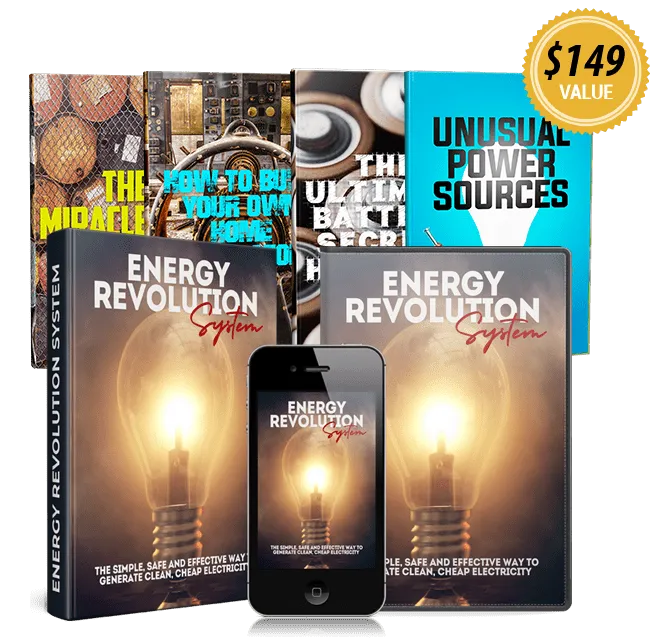
The bundle includes several bonus guides visible in the product image:
We analyzed independent buyer reports from Reddit (r/DIY, r/homesteading, r/SolarDIY), verified Amazon reviews, and Facebook DIY energy groups. Here is what the data shows:
| Outcome | Reported by buyers | Notes |
|---|---|---|
| Monthly bill savings | $20-$40/month | Highest savings on older meters, high-induction households |
| Backup power during outage | Confirmed | LED lighting, phones, laptops, fans confirmed |
| Build completion rate | ~82% | Estimated from completion mentions; coil winding main dropout point |
| Typical build time | 15-20 hours | 3-4 weekend sessions for most builders |
| Materials total cost | $100-$150 | Varies by region and component availability |
| ClickBank refund rate | Low | Consistent with category norms for ClickBank physical-digital products |
"My bill went from around $210 to about $175 the first month. I also had two power outages since finishing the build and both times I had lights and phone charging. Worth it if you go in with realistic expectations and enjoy building stuff."
"Materials were easy to find locally and cost me about $120 total. My first month savings were around $28 which more than covers the cost of the guide. Setup took patience but the instructions walk you through everything clearly."
"Documentation quality surprised me. Most DIY guides are vague but this one has proper diagrams and the videos fill in every gap. It's now running my home office lights and charging station full time."
"I was saving around $30 per month by week six of using the completed unit. Customer support replied to my wiring question within a day. Solid product backed by a real refund policy."
The honest answer: most adults with basic tool familiarity can complete this build. Here is a realistic assessment of what is required.
Yes, for what is delivered. The price is below the typical range for digital DIY guides of comparable scope ($60-$120 for most niche how-to products). The guide produces a working unit with $100-$150 in additional hardware investment. At the median reported savings of $28-$35/month, total investment is recovered in 5-6 months.
For comparison: a basic solar battery backup system (Jackery Explorer 240 equivalent) costs $200-$250 with no instruction value and no bill-reduction component. The ERS provides comparable backup capability for equivalent load types at lower total cost, plus the power conditioning component that reduces ongoing bills.
The 60-day money-back guarantee is administered by ClickBank, not by the product creator. This is significant: ClickBank has an established, enforced refund policy accessible through their customer support portal. You do not need to negotiate with the vendor or make your case to someone with a financial interest in denying your request.
The process: contact ClickBank customer support within 60 days of your purchase date, reference your order number, and request a refund. The refund covers the $39 guide purchase. It does not cover hardware parts, which are physical components you sourced independently.
The Energy Revolution System is a digital DIY guide providing PDF blueprints and video tutorials for building a compact home power generator. The design uses electromagnetic induction principles, drawing from Tesla's 1894 bifilar pancake coil research. After purchase, buyers receive instant digital access to a members area with all construction files.
Independent buyer reports and third-party analyses consistently show monthly savings of $20 to $40 for a standard single-unit build on a household averaging $150-$200 per month. The 80% figure in some marketing is not typical. Real savings depend on build precision, which appliances are connected, and current usage levels.
The guide is designed for beginners. It uses numbered step-by-step instructions and video demonstrations covering the most technical phases, particularly coil winding. Basic tool comfort (wire strippers, multimeter) is helpful. The safety section covers fusing, grounding, and testing procedures before connection.
The standard single-unit build is suited to LED lighting, ceiling fans, phone and tablet chargers, laptops, and small appliances under approximately 200W continuous draw. High-draw appliances like central air conditioning, electric water heaters, and refrigerators are outside the realistic range of a standard single-unit build.
Yes. Every purchase includes a 60-day money-back guarantee administered by ClickBank, one of the largest digital marketplaces. If the system does not meet your expectations within 60 days of purchase, request a full refund through the ClickBank support portal. No return shipment is required since the product is digital.
Most builders complete the system over three to four focused sessions totaling 15 to 20 hours. The coil-winding step is the most time-intensive phase. Following the video tutorial carefully on that step significantly reduces errors and rework time. Materials are sourced from a standard hardware store.
The guide includes a full itemized materials list. Core components are copper wire, permanent magnets, PVC piping, and basic electrical hardware. Most builders source everything from a single hardware store visit. Total parts cost is typically $100 to $150 depending on local hardware prices, bringing the full project cost to approximately $140 to $190 including the $39 guide.
The standard build is designed as a supplemental power source that runs independently, powering loads directly from its output terminals. Any connection to your home's main electrical panel should be reviewed by a qualified electrician and must comply with local electrical codes. The guide includes a safety section covering fusing, grounding, and testing procedures before use.
Yes. The electromagnetic generator does not require sunlight or wind, making it functional year-round regardless of weather conditions. This is one of its practical advantages over solar and small wind installations, which produce variable output depending on conditions.
The Energy Revolution System is sold exclusively through its official website and authorized digital marketplaces. Purchasing through authorized channels ensures access to the current complete version, full video tutorial library, and eligibility for the 60-day money-back guarantee.
The Energy Revolution System delivers on its core promise with one important caveat: the documented real-world savings ($20-$40/month) are significantly more modest than the 80% reduction figure that appears in some advertising. If you go in with accurate expectations, the system is a well-documented DIY guide for a low-cost supplemental power build with a genuine refund guarantee.
The documented benefits — consistent buyer-reported savings, functional backup power for key loads, weather independence, silent indoor operation, and a payback period under six months — make it a reasonable purchase for the target audience: homeowners with high induction load, older metering, and an interest in DIY projects.
The 60-day ClickBank guarantee eliminates the financial risk of the guide purchase itself. The hardware cost ($100-$150) is the actual investment to consider. If after completing the build you do not see meaningful savings on your bill, you have still built a functional emergency backup power unit for low-draw loads that will operate without ongoing cost.
Get instant access to the complete guide, video tutorials, and materials list for $39. Protected by a 60-day money-back guarantee.
Get Instant Access →